


New products launching
Products entering supermarkets, distribution, e-commerce platforms or overseas retail without product codes yet.
GS1 · GTIN · EAN · UPC
From target markets, platform requirements and SKU counts to packaging levels, we help you choose the right product identification scheme, prepare the application, and assign and use barcodes in a disciplined way.
Requirements, fees and timelines depend on the applicant, target market and the issuing authority.
Use cases
A barcode is more than black lines on a package. The registrant, product differences, packaging levels and sales channels must stay consistent, otherwise you risk duplicate codes, failed scans or mismatched platform listings.
Products entering supermarkets, distribution, e-commerce platforms or overseas retail without product codes yet.
New colours, capacities, models, bundles or pack sizes in an existing range require re-counting your codes.
Moving from the home market into North America, Europe or Asia requires confirming UPC, EAN and platform rules.
Unclear code sources, missing allocation records or mixed product data call for a traceable code register.
Key concepts
Tell the numbering system apart from the barcode carrier, then apply them correctly by market, packaging and supply chain.
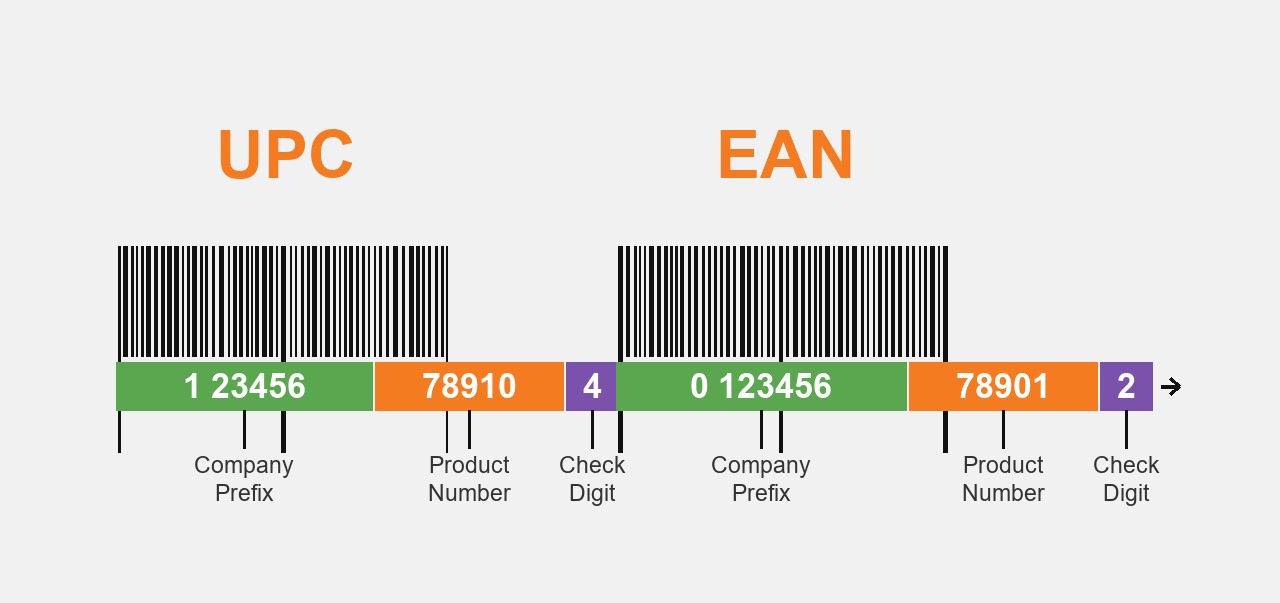
The numbering system that uniquely identifies trade items, commonly 8, 12, 13 or 14 digits.
Widely used across Europe, Asia and other international markets for most retail packaging.
Usually 12 digits, common in US and Canadian retail and e-commerce.
Used for cartons, multipacks or logistics packaging levels — not a consumer unit code.
How to choose
Consultants judge from your actual business information; do not simply copy templates or another seller's coding practice.
UPC-A is more common in North America; EAN-13 is more common across Europe, Asia and other international retail markets.
Single units, inner packs, bundles and shipping cartons may sit at different identification levels — one number cannot be copied onto all packaging.
Amazon and other platforms may verify brand, product data and GTIN origin; some cases qualify for GTIN exemption, subject to each marketplace's rules.
Quantity planning
Changes in colour, size, capacity, model, bundle contents or pack count can each create an independent SKU. Building a product matrix before applying helps avoid shortfalls and duplicate assignments later.
This is a preliminary counting method, not a formula every business uses. Final code quantities follow your actual product structure and the applicable rules.
If there are also 2-packs, gift sets or shipping cartons, decide whether each forms an independent trade item.
Service scope
Check applicability and required materials based on the applicant, sales markets and product plan.
Sort out SKUs, variants, bundles and packaging levels into a maintainable allocation logic.
Explain code artwork, placement, quiet zones, scaling, print quality and scan verification.
Verify company and product information against requirements to avoid back-and-forth over names or addresses.
Explain GTIN submission, brand consistency and possible exemption paths for each target platform.
Cover file storage, allocation records, product updates and adding codes later.
Process
Target markets, platforms, product types, SKU counts and existing barcodes.
Analyse code types, applicant, capacity and packaging-level needs.
Check that company name, registration data, contacts and product plans are complete and consistent.
File the confirmed application and supplement materials per reviewer feedback.
Explain code allocation, artwork, packaging print, platform submission and register upkeep.
Preparation
Common risks
Product codes must track your company and products for the long term. Unclear sources, licences or allocation records can hurt platform verification, channel partnerships and later expansion.
Using one number for several products creates confusion in inventory, orders and platform data.
When applicant, brand name and platform listings lack a clear relationship, further verification may follow.
Over-scaling, missing quiet zones, inverted colours or low-quality printing hurt scannability.
Without recording number-to-SKU mapping, growth brings mismatches and duplicate assignments.
FAQ
Usually not. When products differ in specification, colour, capacity or packaging in a trade-relevant way, each normally needs its own GTIN, following the applicable GS1 allocation rules.
GTIN is the umbrella term for Global Trade Item Numbers, commonly 8, 12, 13 or 14 digits. UPC-A is usually 12 digits and mainly used in North America; EAN-13 is 13 digits and common across Europe, Asia and other international retail markets.
Requirements differ by marketplace and category, and platforms may verify GTIN against brand or product data. Some qualifying products can apply for GTIN exemption — always follow the target storefront's current policy and platform review.
Different colours and sizes usually form independent SKUs and are identified separately. For example, 2 styles, 3 colours and 4 sizes can create 24 consumer SKUs; bundles and cartons add packaging-level decisions.
After codes are assigned, generate compliant barcode artwork and check size, ratio, quiet zones, colours, print position and scan quality. A sample scan test before volume printing is recommended.
EAN-8 is typically for small packaging where EAN-13 cannot reasonably fit. Availability and application depend on package size and local GS1 member organisation rules.
Not necessarily. Consumer units, multipacks and shipping cartons are different packaging levels and may need an independent GTIN or a logistics-suitable code — never a copy of the unit number.
It depends on the jurisdiction, applicant documents, capacity, completeness and the issuing body's review progress. We can outline the expected schedule once the plan is confirmed.
Licensing, renewal and maintenance requirements differ by region. Keep entity information and related services active per the issuing body, and maintain the number-to-product mapping.
Check the number's source, licensing and platform acceptance carefully. Numbers with unclear origin or mismatched entities can jeopardise platform verification, distribution partnerships and long-term product management.
Get started
Tell us your target countries, platforms, product counts, specifications and existing codes. Our consultants will sort out applicable types, materials and code capacity.
provides application consulting and handling assistance only; we do not guarantee approval by any platform, retailer or authority. Final results are subject to each institution's independent review.
From company formation to bank accounts, tax compliance and cross-border operations, Zhongcheng Huigu provides professional, dependable one-stop service.